
Printscene — Somercotes, Alfreton, Derbyshire
Business Card Finishes Explained: Matte, Gloss, Silk and Spot UV
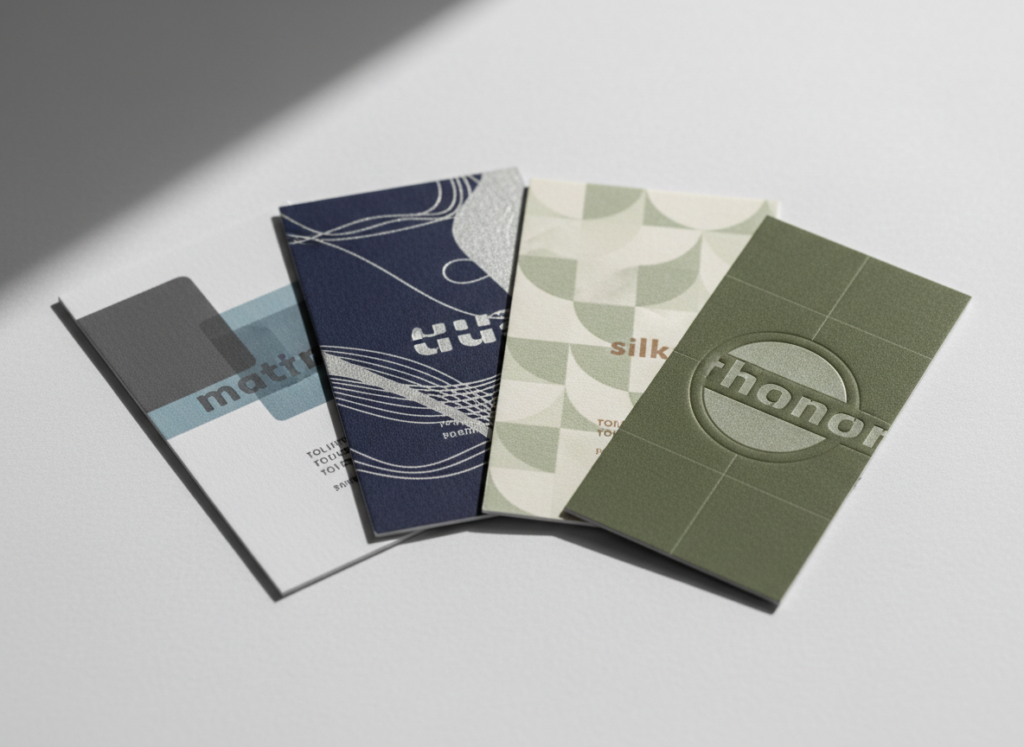
The finish on a business card shapes how it feels in the hand and what it says about your business before anyone reads a word on it. Matte, gloss, silk, spot UV — each one has a distinct look and suits different brands and situations. This guide explains what each finish is, what it looks like in practice, and how to choose the right one for your cards.

Written by Printscene
- Business Cards
- Print Finishes
- Matte Gloss Spot UV
- Derbyshire
Why the Finish Matters
Most people focus on the design of a business card — the logo, the colours, the layout. But the finish affects how a card is perceived the moment someone picks it up. A card that feels flimsy or has a surface that scuffs easily won’t leave the impression you’re aiming for, regardless of how good the design is.
The laminate or coating applied to the surface of a card changes its tactile quality, its durability, how colours appear when printed, and whether it can be written on. These are practical considerations, not just aesthetic ones.
Choosing the right finish comes down to understanding your brand, your industry, and what impression you want to leave. This guide takes you through the main options in plain terms.
The Main Business Card Finishes
Silk / Satin Laminate
Silk lamination is the most widely ordered finish for business cards in the UK. It sits between matte and gloss — smooth to the touch without being shiny, with colours that look rich and accurate. It doesn’t attract fingerprints the way gloss does, and it holds up well to everyday handling.
Silk-laminated cards feel substantial and have a professional quality that suits most industries. If you’re not sure which finish to go for, silk is a reliable default that works for everything from tradespeople to solicitors to creative studios.
Gloss Laminate
Gloss lamination gives cards a shiny, high-contrast surface. Colours — particularly deep blues, reds and blacks — look vivid and punchy. The surface catches the light, which makes cards visually striking when you first see them.
The downside of gloss is that it shows fingerprints quickly and can look less premium over time if cards are handled frequently. It works well for photography, beauty, events and retail brands where bold visual impact matters. It’s less suited to corporate or professional services contexts where a subtler look is preferred.
Matte Laminate
Matte lamination creates a flat, non-reflective surface. It’s understated and tactile — cards feel smooth and slightly velvety to the touch. Colours sit slightly softer than on gloss, which some brands find better suited to their identity.
Matte cards are popular with architects, consultants, legal and financial professionals, and design studios. They read as considered and understated rather than bold and attention-seeking. They’re also easier to write on than gloss or silk, which matters if you regularly add notes or personal details by hand when networking.
Spot UV
Spot UV is a selective finish — a gloss coating applied only to specific areas of a matte or silk-laminated card. Usually, that means a logo, a geometric pattern, or a name is given a high-shine finish, while the rest of the card stays flat. The contrast between the two surfaces creates a subtle but striking premium effect.
Spot UV cards require slightly more preparation in the design stage — the printer needs a separate file indicating which areas receive the UV coating. But the result is a card that stands out in a wallet or a pile on a desk. It’s a popular choice for premium brands, creative professionals and businesses where making a strong first impression matters.
Spot UV tip: The effect works best when there’s clear contrast between the coated and uncoated areas. A small logo on spot UV over a dark matte background is often more striking than trying to UV-coat most of the card.
How Each Finish Affects Print Colours
The laminate or coating you choose affects how your printed colours look on the finished card. This is worth understanding before you finalise your design.
Gloss
Enhances colour vibrancy and contrast. Deep tones look particularly rich. Photographs and full-colour imagery tend to look their most impactful on gloss.
Silk
Colours are accurate and well-reproduced without the added intensity of gloss. Most designs translate well to silk. A reliable choice when colour accuracy is important.
Matte
Colours appear slightly softer and more muted than on gloss. Light colours and pastels can feel more refined on matte. Dark backgrounds tend to absorb the finish well, giving a premium feel.
Spot UV
The base layer is usually matte or silk, so those colour characteristics apply. The spot UV areas catch the light differently, creating a visual contrast that highlights whatever is coated.
Choosing the Right Finish for Your Business
There’s no single correct answer here — the best finish depends on your brand, your industry and what you want the card to communicate. Here’s a simple way to think about it.
Go for silk if:
Go for gloss if:
Go for matte if:
Go for spot UV if:
Card Stock: Thickness and Paper Type
The finish is applied on top of the card stock, and the weight and type of board underneath also affects how a card feels. These two things work together.
Standard business cards are usually printed on board between 350gsm and 400gsm. Thicker stocks — sometimes called super-thick or triple-laminated boards — give a noticeably more substantial feel, which complements premium finishes like spot UV particularly well.
The choice of board can also affect finish options. Some special paper stocks — uncoated or textured boards — don’t take all laminate types in the same way, so it’s worth checking with your printer if you have a specific combination in mind.
Cannibalisation check: This post supports the printed business cards service page at Printscene and does not duplicate it. The service page focuses on ordering; this post covers finish selection decisions.
Practical Considerations Before You Order
File Preparation for Spot UV
Spot UV requires an additional file alongside your main artwork — a separate black-and-white PDF that shows the printer exactly which areas of the card should receive the UV coating. If you’re working with a designer, they should be able to prepare this. If you’re ordering direct, the printer will advise on what’s needed.
Turnaround Times
Standard silk or gloss laminated cards are usually among the quickest business print products to turn around. Spot UV cards take a little longer because of the additional finishing stage. If you need cards urgently, silk or gloss is usually the more practical choice.
Consistency Across Print Runs
If you order business cards in batches over time, try to keep the same finish across runs to maintain consistency. Mixing matte cards from one batch with gloss cards from another in the same box creates a slightly off-brand impression — especially if staff are handing them out interchangeably.
Frequently Asked Questions
Can I write on a business card with a gloss or silk finish?
Gloss laminated cards are difficult to write on — most pens won’t adhere properly to the surface. Silk is slightly better but still not ideal. Matte is the easiest to write on. If you regularly add handwritten notes to cards when networking, matte is the practical choice.
Does spot UV cost significantly more than standard lamination?
Yes, spot UV adds cost because of the additional finishing stage. The exact difference depends on quantity and specification. It’s best to get a quote with the specific options you’re considering, as the premium varies between suppliers and run sizes.
What is the difference between lamination and varnish?
Lamination is a physical film bonded to the surface of the card. Varnish is a liquid coating applied and cured. Both can produce matte or gloss effects. Lamination is more common for business cards and tends to be more durable. UV spot coating is technically a varnish applied selectively to specific areas.
Can I have different finishes on the front and back of a card?
Yes — it’s common to have a gloss or spot UV finish on the front and a matte back, for example. The matte back is easier to write on and creates a nice contrast with a premium front. This combination is worth considering if you want something a little different without going all-in on one finish.
How many business cards should I order?
This depends on how frequently you hand them out. For most small businesses, 250–500 cards is a sensible starting point. Larger quantities bring the unit cost down, so if you’re confident in your current branding and contact details, ordering in higher volume usually makes financial sense.
Ready to Order Your Business Cards?
Printscene prints business cards from our Alfreton workshop. We can help you choose the right finish and advise on artwork setup before we print. Get in touch for a friendly quote — no obligation.