
Printscene — Somercotes, Alfreton, Derbyshire
Part Wrap vs Full Wrap: Which Vehicle Graphics Option Is Right for Your Business?
If you’re thinking about vehicle graphics for your van or car, one of the first questions to answer is how much of the vehicle to cover. Part wraps and full wraps both have a place — but they suit different budgets, vehicles and business goals. Here’s how they compare so you can decide which makes more sense for your situation.

Written by Printscene
- Focus keyword: part wrap vs full wrap
- Read time: 8 minutes
What Is a Part Wrap?
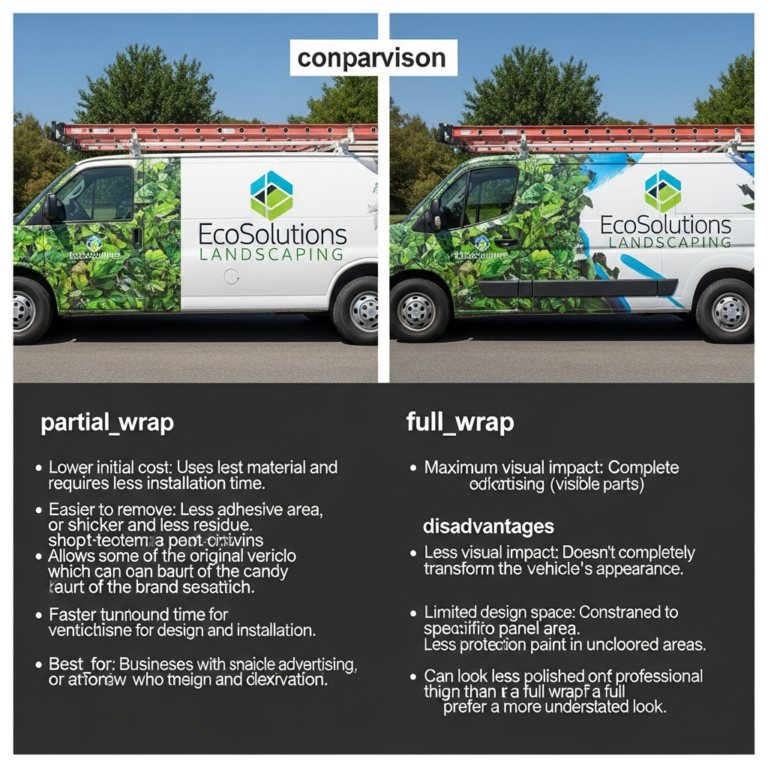
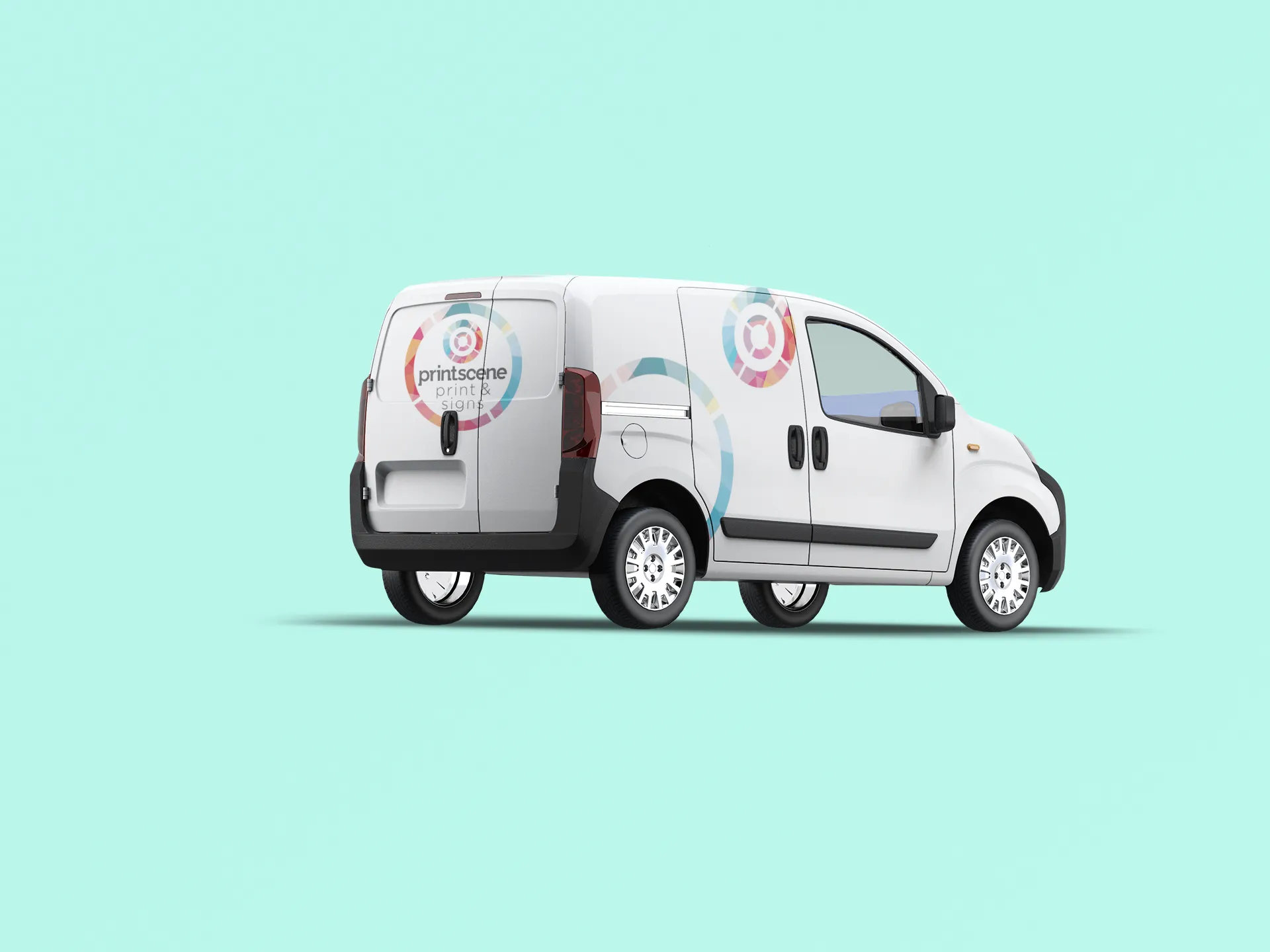
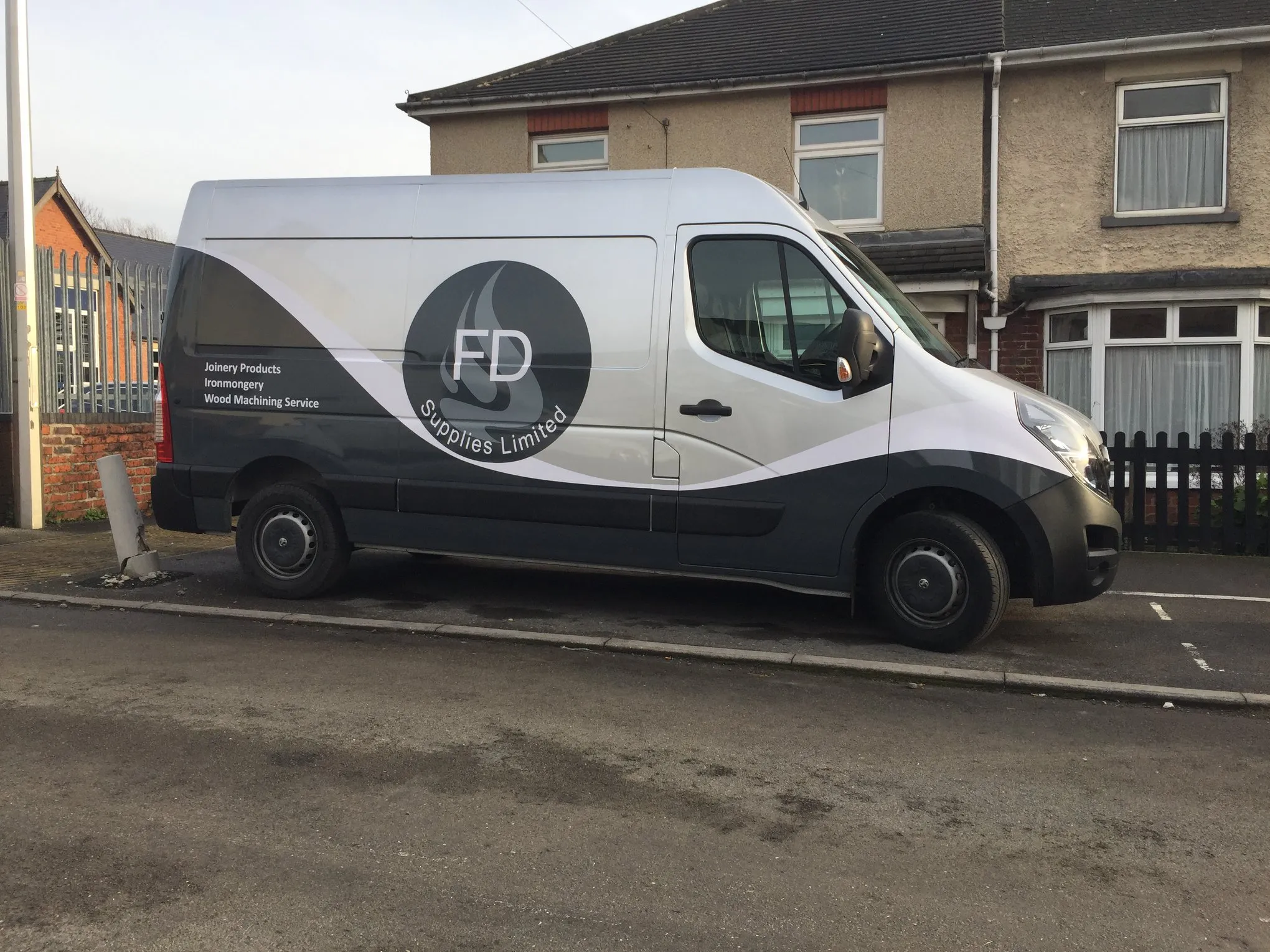
A part wrap covers a section of a vehicle — typically one or more panels — rather than the entire exterior. Common part wrap approaches include rear doors, side panels or a lower section of the vehicle. The wrap vinyl covers only the specified area, and the rest of the vehicle remains in its original colour or with additional smaller decals applied separately.
Part wraps are popular with businesses that want a professional branded vehicle without committing to the cost of a full wrap. They work particularly well on vehicles where the original colour is neutral — white or silver vans, for example — because the unwrapped sections don’t draw attention away from the branded panels.
Part wraps can also refer to smaller cut vinyl decals and graphics applied to specific areas, though in most contexts the term describes a larger vinyl graphic covering a meaningful portion of the vehicle.
What Is a Full Wrap?
A full wrap covers the entire exterior of the vehicle — roof, bonnet, all door panels, bumpers and any other exterior surfaces — in printed vinyl. A full wrap effectively changes the visible colour and appearance of the vehicle completely, replacing the paintwork with a continuous printed design.
Full wraps deliver maximum brand impact because there is no break in the design — every visible surface is on-brand. They also offer the secondary benefit of protecting the original paintwork underneath from minor scrapes, UV exposure and weathering, which can help maintain the vehicle’s resale value.
Full wraps require more material, more design work and more installation time than part wraps, which is reflected in the cost. They are most commonly used by businesses with a clear branding strategy and a vehicle that represents the company in public regularly.
Part Wrap vs Full Wrap: Key Differences
Cost
Part wraps are significantly less expensive than full wraps because they use less material and take less time to install. A simple rear-door part wrap on a panel van will cost considerably less than a full exterior wrap on the same vehicle. If budget is the primary constraint, a well-designed part wrap will almost always be the better starting point.
Visual impact
Full wraps deliver more visual presence because the design extends across the entire vehicle. A part wrap can look highly professional, but where there are visible sections of original paintwork, the overall effect is less immersive. For vehicles that are driven in competitive markets or need to make an impression at a distance, a full wrap has the edge.
Design flexibility
Full wraps allow for continuous designs — a pattern, gradient or large image that flows across the entire vehicle without interruption. Part wraps are naturally constrained by the panels being wrapped, which means the design has to work within those boundaries. This can actually be a useful creative constraint, focusing the design on what matters most.
Paint protection
A full wrap protects all exterior paintwork from UV fading, light scratches and road debris. A part wrap only protects the wrapped panels. If protecting a relatively new vehicle’s paintwork is a priority, a full wrap has a clear advantage. For older vehicles, this benefit is less significant.
Installation time
A part wrap can be installed more quickly than a full wrap. For a business that can’t take a vehicle off the road for long, a part wrap installation is less disruptive. Full wraps require more careful preparation of the entire vehicle surface and more time in the workshop.
Removal
Both part wraps and full wraps can be removed by a professional installer using a heat gun and careful peeling. If removed properly, neither should damage the original paintwork underneath. The removal process for a full wrap takes longer simply because there’s more vinyl to remove, but the principles are the same.
When a Part Wrap Makes More Sense
A part wrap tends to be the right choice in these situations.
When a Full Wrap Makes More Sense
A full wrap tends to be the right choice in these situations.
Design Considerations for Both Options
The quality of the design matters as much as the coverage decision. A poorly designed full wrap will underperform a well-designed part wrap.
Keep it legible at speed
Other road users see your vehicle for a few seconds at most. The most important information — company name, phone number and website — needs to be readable quickly. Avoid overcrowding the design with multiple messages. Prioritise the elements that generate enquiries.
Use contrast effectively
Dark text on a dark background and light text on a light background both reduce legibility. Strong contrast between your text and the background makes the most important information pop. This applies whether you’re working with a part wrap panel or a full vehicle design.
Match your brand
The colours, fonts and logo on your vehicle should match the rest of your brand — your website, uniforms, stationery. Inconsistency between brand touchpoints reduces the professional impression a branded vehicle is meant to create.
Printscene tip: Before finalising a vehicle graphics design, consider viewing a proof of how it will look on the actual vehicle shape. Design tools that template the specific van or car model make it much easier to spot issues before vinyl is cut and applied. We can advise on this as part of the design process.
How Vehicle Wraps Are Installed
Whether you choose a part wrap or a full wrap, professional installation makes a significant difference to the finished result and the lifespan of the graphics.
The vehicle surface needs to be thoroughly cleaned and degreased before installation. Any dirt, wax or residue left on the paintwork can cause the vinyl to lift or bubble over time. On a full wrap, this preparation process extends to the entire vehicle including edges, door jambs and around mirrors.
The vinyl is applied panel by panel using specialist tools to remove air bubbles and ensure the vinyl conforms correctly to any curves, edges or recesses. On a part wrap this is relatively straightforward; on a full wrap it requires more skill and time, particularly around complex shapes.
Once applied, the vinyl edges are heated and tucked around panel edges or into recesses to prevent lifting. The end result on a professionally installed wrap should look clean, flat and seamless.
Frequently Asked Questions
Can I start with a part wrap and upgrade to a full wrap later?
Yes. A part wrap doesn’t prevent you from adding to or replacing the graphics later. If you start with rear door graphics and want to expand to a full wrap when budget allows, the original graphics can be removed and a full wrap applied. It’s worth keeping this future option in mind when designing the initial part wrap, so the design can scale up consistently.
Does a vehicle wrap affect the original paintwork?
When applied and removed correctly by a professional, vehicle wrap vinyl should not damage paintwork in good condition. In fact, the vinyl protects the painted surface underneath from UV fading and minor surface marks. If the paintwork is damaged, peeling or previously repaired with non-original paint, there is a greater risk of issues on removal — your installer should assess the vehicle before application.
How long does a vehicle wrap last?
A quality cast vinyl vehicle wrap installed correctly typically lasts between three and seven years depending on the material, UV exposure, how often the vehicle is washed and general use. Vehicles that are parked outside in direct sunlight for long periods will see faster degradation than garaged vehicles.
Is a full wrap significantly more expensive than a part wrap?
Yes, a full wrap costs more due to the additional material, design work and installation time involved. The exact difference depends on the vehicle size and the complexity of the design. For a guide on vehicle graphics costs, see our vehicle graphics cost page.
Do you install vehicle wraps as well as printing them?
Contact us to discuss what’s involved in your specific project. We produce vehicle graphics at our Alfreton workshop and can advise on the full process from design through to application.
Thinking about vehicle graphics for your business?
Whether you want a simple set of decals, a part wrap or a full vehicle design, we can help you work out the right approach. Get in touch with Printscene in Alfreton, Derbyshire, to talk through your options.