
Printscene — Somercotes, Alfreton, Derbyshire
3D Signs and Dimensional Letters for Businesses: Types, Materials and What to Expect
A flat printed sign does the job. A 3D sign gets noticed. Dimensional letters and raised signage create depth, shadow and visual impact that flat graphics cannot match — and they work for everything from shop fronts and office receptions to trade counters and exhibition stands. This guide explains the main types of 3D signs for business, the materials available and how to decide which option suits your premises and budget.

Reviewed and signed off by Printscene
- Topic: 3D signage
- Audience: Business owners
- Read time: 7 min
What are 3D signs and dimensional letters?
3D signs are any signage where the lettering, logo or design elements stand out from the background surface rather than being printed flat against it. They are also called dimensional letters, raised letters, built-up letters or stand-off signs depending on the style.
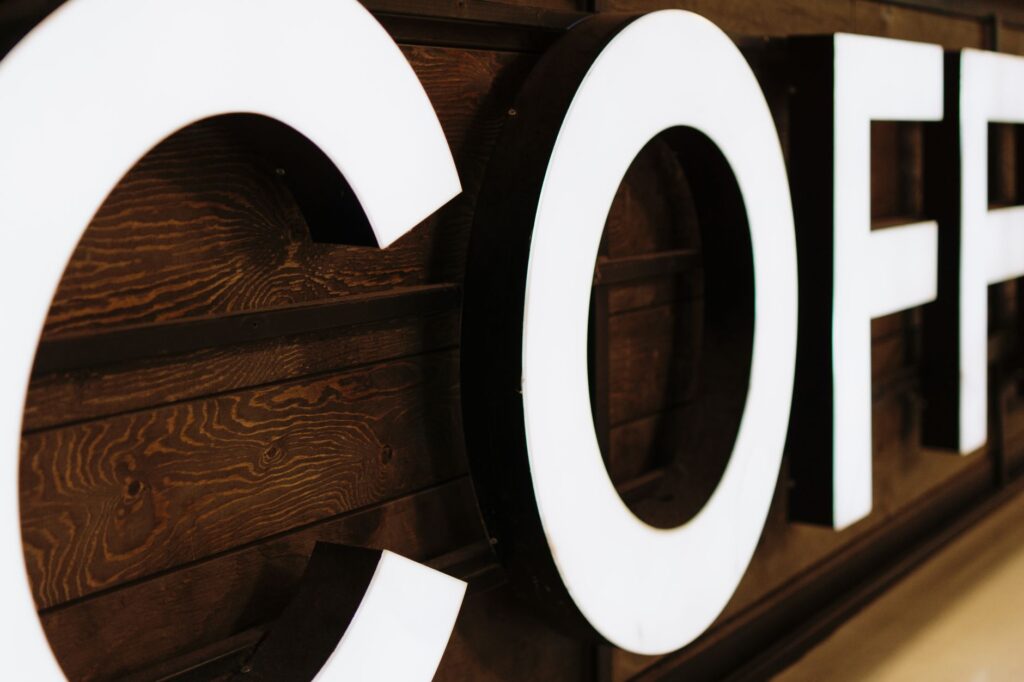
The idea is straightforward: instead of printing your business name onto a flat board, individual letters or logo elements are cut or fabricated from a solid material — acrylic, foam, aluminium or stainless steel — and fixed to a wall, panel or backing board. The result catches the light, casts a shadow and looks substantial in a way that flat-printed graphics cannot replicate.
3D signs are used across a wide range of settings: shop fronts, office reception areas, meeting rooms, warehouse entrances, retail concessions, showrooms and hotel lobbies. They are common in commercial fit-outs and equally effective on older buildings when the style is matched to the architecture.

Flat-cut letters or built-up letters: the two ways a 3D sign is made
Flat-cut letters are cut from a single sheet of material, usually between 3mm and 20mm thick, so the depth of the sign is simply the thickness of that sheet. Built-up letters are fabricated instead: a cut face with separate sides, called returns, joined on to create real depth and room for internal illumination.
Flat-cut letters
Cut to shape by CNC router or laser from acrylic, aluminium, stainless steel, Dibond or foamex. The slim profile sits close to the surface, or on stand-off fixings for a shadow gap, which suits reception walls, interior branding, directional signage and any situation where a shallow, understated profile is wanted.
Built-up letters
Also called fabricated or dimensional letters. The face and returns are made separately and welded or folded together, most often in aluminium or stainless steel, then fitted directly to the wall or mounted on rails. The hollow section is what allows LED illumination, either lighting the face or throwing a halo onto the wall behind, and the deeper returns cast much stronger shadow lines on a shop front.
As a rule of thumb, an interior wall with limited depth and no power supply points towards flat-cut, while an external fascia that needs presence after dark points towards built-up. Tell us where the sign is going and whether it needs to be lit and we will tell you which construction makes sense.
Acrylic 3D lettering: clean lines and a modern look
Cut acrylic is one of the most popular materials for dimensional signage. It is versatile, relatively lightweight and available in a huge range of colours — including clear, frosted and mirrored finishes. Acrylic letters are laser-cut to precise dimensions and can be produced in any font and almost any size.
How acrylic letters are fixed
Acrylic letters are fixed in one of two main ways. Direct-fix mounting bonds the letter flush to the wall or backing panel using adhesive or concealed fixings. Stand-off mounting uses metal spacers — usually chrome or brushed stainless steel posts — to hold the letter a short distance from the wall, creating a shadow gap that adds depth and makes the letters appear to float. Stand-off letters are more expensive but create a noticeably more premium result.
Colour and finish options
Standard cast acrylic is available in hundreds of colours, including translucent shades that look striking when back-lit. Painted acrylic can match almost any Pantone reference for precise brand colour matching. Mirrored acrylic is popular in retail and beauty settings. Brushed silver and gold effects add a premium appearance at a lower cost than fabricated metal.
Back-lit and illuminated acrylic signs
Translucent or opal acrylic can be paired with LED modules to create illuminated dimensional letters. Light shines through or around the letters in the evening, keeping your signage visible outside business hours. This is a popular choice for restaurants, hotels, gyms and retail businesses where after-dark visibility matters.
Good for: Modern businesses, offices, retail, salons and any setting where clean contemporary design is the goal. Acrylic is lighter than metal and more cost-effective for larger letter sizes.
Foam letter signs: lightweight and practical
High-density foam — typically expanded PVC or polyurethane — can be cut to letter shapes and finished to look like almost any other material. It is significantly lighter than acrylic or metal, which matters when you are mounting large letters on a wall or attaching them to an exhibition backdrop.
Foam letters are usually finished with a paint or vinyl coating. They can be made to look like brushed metal, gloss acrylic or matte — the foam provides the structural form and the coating provides the aesthetic. For interior use they are a practical and budget-friendly option for dimensional signage. For outdoor use, check that the specific material and finish are rated for exterior conditions before ordering.
Foam dimensional letters are widely used in exhibition stands and trade show displays where they need to be packed and moved regularly. They are also common in retail interiors, offices and hospitality environments where a three-dimensional effect is wanted without the cost and weight of solid acrylic or metal.

Metal 3D letters: stainless steel and aluminium
Fabricated metal letters are at the premium end of the dimensional signage market. They are used where longevity, weight and perceived quality are priorities: corporate headquarters, law firms, high-end retail and public buildings.
Stainless steel letters
Stainless steel is exceptionally durable and handles outdoor conditions without maintenance. It is available in polished, brushed or painted finishes. The polished finish is highly reflective and catches light dramatically. Brushed gives a modern industrial look. Painted stainless steel matches any brand colour while retaining the durability of metal.
Aluminium letters
Lighter than stainless steel and easier to fabricate, aluminium is a practical choice when metal letters are needed in larger sizes or at lower cost than stainless. It can be anodised in silver, gold, bronze or black, or powder-coated to any RAL or Pantone reference for precise brand colour matching.
Halo back-illumination
Metal letters can be fitted with LED modules inside the letter form. Light escapes through a gap between the back of the letter and the wall, creating a halo or reverse-lit glow around each letter in the evening. This effect is popular for premium restaurant and hotel signage where after-dark branding is important.
Worth knowing: Metal letters are substantially heavier than acrylic or foam. Make sure the wall or surface they are being fixed to can support the weight. On rendered, tiled or hollow walls, specialist fixings may be needed. Discuss this with your sign maker before finalising the specification.
Where 3D signs work best
Dimensional lettering works well in almost any setting, but there are places where it adds particular value:
When flat signage is the better choice
Not every sign needs to be three-dimensional. Flat printed signs are more cost-effective, quicker to produce and entirely appropriate for many applications — directional signs, price boards, menu boards, informational notices and temporary signage. 3D signage earns its additional cost when visibility, permanence and first impressions are the priority.
A useful rule of thumb: if the sign is the first thing a customer or visitor sees when approaching your business, it is worth considering dimensional lettering. If it is a working sign that needs to communicate information clearly, flat print is usually the right answer. You can also combine both: a 3D company name in acrylic letters with a flat printed panel below for contact details or a tagline is a practical and popular approach.
At PrintScene we produce custom acrylic signs and lettering for businesses in Derbyshire and beyond. If you are thinking about 3D signs for your premises, get in touch and we will talk you through the options.
Interested in 3D signage for your business?
Talk to PrintScene about acrylic letters, dimensional signage and custom sign options for your premises.
Frequently asked questions
How long do 3D acrylic signs last?
Quality acrylic signs last many years when properly installed. Interior signs can last ten years or more without significant degradation. For exterior signs, the UV stability of the acrylic and any paint or vinyl finish matters — confirm with your sign maker that the materials are rated for outdoor use in UK weather conditions.
Can 3D signs be installed outdoors?
Yes, with the right materials and fixings. Exterior-grade acrylic, stainless steel and aluminium letters are all suitable for outdoor use. Foam letters are generally better kept indoors. Illuminated signs must use LED modules rated for exterior installation.
What is the difference between stand-off and flush-mounted letters?
Flush-mounted letters sit directly against the wall or backing. Stand-off letters use metal spacers — typically 10 to 25mm long — to hold the letter away from the surface, creating a shadow line around each letter. Stand-off mounting costs more but produces a more premium appearance.
Can I match a specific brand colour?
Yes. Acrylic can be painted to match a specific Pantone reference. Powder-coated metal can match both Pantone and RAL references. Share your brand guidelines or Pantone code and we will advise on the best approach for your chosen material.
What sizes are available for 3D letters?
There is no fixed size range — it depends on the material and fabrication method. Small acrylic letters start from around 30mm high. Large-format dimensional letters for external building signage can be much taller. Discuss your requirements and wall space with us and we will confirm what is achievable.
Do you make illuminated 3D signs?
Get in touch to discuss your requirements. We can advise on what is possible for your setting, budget and whether planning consent may be needed for illuminated signage.