
Printscene — Somercotes, Alfreton, Derbyshire
Vehicle Wrap Aftercare: How to Wash, Park and Look After Your Graphics
Here is something most people never hear until after the van comes back from the wrappers: if you have had a full colour-change wrap fitted, DVLA expects you to update the colour on your V5C. It is on the government’s own list of changes you must record. That is the sort of detail that separates a wrap that stays sharp and legal for years from one that looks tired in eighteen months. This guide covers what to do in the first two days, how to wash a wrap without damaging it, and what quietly shortens its life.

Reviewed and signed off by Printscene
- Topic: Vehicle graphics
- Audience: Van owners and fleet operators
- Read time: 8 min
In short: leave a new wrap unwashed for the first 48 hours, then hand wash it roughly once a month using a vehicle detergent that is pH balanced between 5 and 9, free from abrasives and free from added waxes. Rinse loose grit off before you touch the surface, avoid close-range pressure washing, and park out of prolonged direct sun where you can.
First, the paperwork most people miss
A full wrap changes what colour your vehicle appears to be. DVLA treats colour as one of the details you are required to keep current, and it sits on the official list of changes you must put in your V5C alongside engine, fuel type and seating capacity.
This matters most for a colour-change wrap on a white van that is now, say, matte grey. It is far less of an issue for printed graphics and lettering applied over a base colour that still reads as the registered one. If you are unsure which side of the line your job falls, the sensible test is simple: if someone reading out the colour on the V5C would not describe the vehicle in front of them, update it.
It is also worth telling your insurer. Most treat a wrap as a modification, and a one-line email at the time costs nothing compared with a query at claim stage.
The first 48 hours
A freshly applied wrap is still settling. The adhesive continues to bond and the installer will normally have post-heated the edges and recesses so the film holds its shape.
Avery Dennison’s own maintenance bulletin is explicit that films, graphics and wraps should not be cleaned or washed within the first 48 hours after application. After that initial period the same guidance recommends cleaning at least once a month, or more often depending on how the vehicle is used.
So for two days: drive it, park it, do not wash it. If it rains, that is fine. What you are avoiding is water, detergent and pressure at the seams while the film is still relaxing into place.
How to wash a wrapped vehicle
What to use
The detergent does more damage than the technique when it goes wrong. The manufacturer guidance is to use a product designed for vehicles that is free from abrasive components, contains no added waxes or polishes, and is pH balanced between 5 and 9 — in other words neither strongly acidic nor strongly alkaline.
That rules out a surprising amount of what sits in the average garage. Traffic film removers are often strongly alkaline. Wheel cleaners are frequently acidic. Household washing-up liquid is not formulated for vehicle finishes at all. And “wash and wax” products leave a residue that can look patchy on matte film in particular.
Avoid solvents entirely on the film surface. Isopropyl alcohol and similar hard solvents are used during installation for specific purposes and should not be your general cleaning product afterwards.
The routine that actually protects the film
Rinse first. The most common way people scratch a wrap is by putting a sponge onto dry grit and dragging it. Get the loose dirt off with clean water before anything touches the surface.
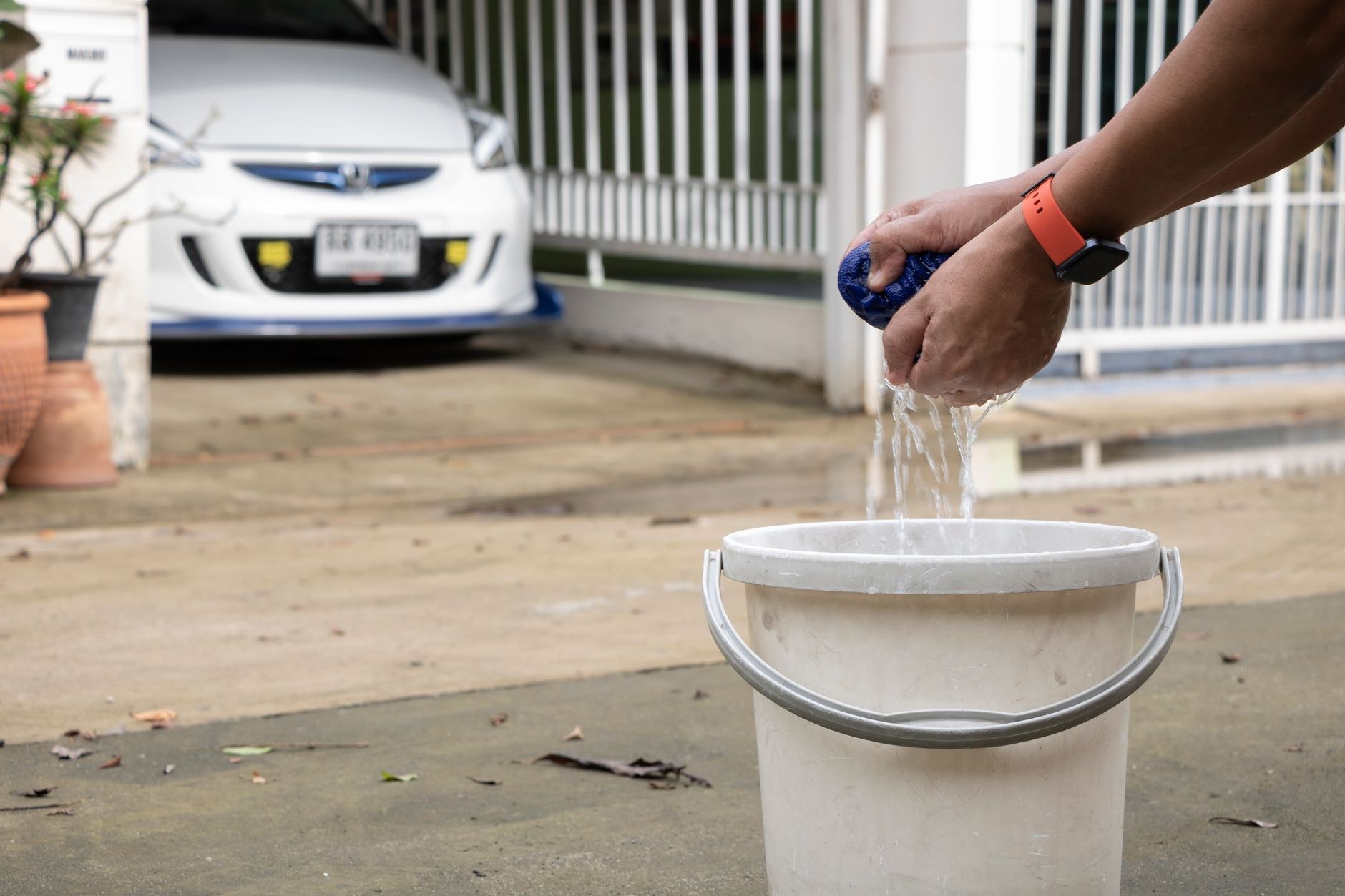
Then use the two-bucket method: one bucket with your detergent solution, one with clean rinse water. Wipe gently front to back with a soft sponge or wash mitt, starting at the top of the vehicle and working down, and rinse the sponge in the clean bucket between sections rather than putting the dirt straight back into your soap. Finish with a thorough rinse in clean water.
Dry with a soft microfibre rather than leaving it to air dry, especially in hard water areas, or you will trade a clean wrap for a spotted one.
Pressure washing
You can pressure wash a wrap, within limits. The manufacturer bulletin permits it up to a maximum of 1200 psi — around 80 bar — using a wide-angle nozzle. The failure mode is always the same: a narrow jet held close to an edge, a seam, or a recess, which lifts the film. Keep your distance, keep the angle wide, and never aim directly into an edge.
Automatic brush car washes are the other common culprit. Rotating brushes catch edges and scuff matte and textured finishes. If a wrapped vehicle has to go through a machine, a touchless wash is a far safer choice than a brush one.
What quietly shortens a wrap’s life
Most wraps do not fail dramatically. They just look progressively worse, and almost always for reasons that were avoidable.
Contaminants left to sit. Fuel spills, bird droppings, tree sap and road salt are all far more aggressive the longer they stay on the film. Dealt with the same day they are a wipe with clean water; left for a fortnight in summer they can leave a permanent mark. Keeping a bottle of water and a microfibre in the van is genuinely the cheapest aftercare there is.
Prolonged direct sun. UV is the main driver of colour fade, and a vehicle parked outdoors on the same aspect for years will fade unevenly — the sun-facing side ages while the other side does not. Where you have the option, park under cover or vary the orientation.
Washing too infrequently. This one is counterintuitive. People assume less washing means less wear, but the guidance points the other way, recommending at least monthly cleaning. Grime holds moisture and contaminants against the film.
Ignoring a lifting edge. A small lifted corner is a quick fix. The same corner after three months of motorway driving is a peeled panel. If you spot one, get it looked at rather than pressing it down and hoping.
Where wraps fail first
Knowing where to look makes a five-minute inspection worthwhile. Problems almost always start in the same places: the leading edges of doors and bonnets, deep recesses and body swage lines, around handles and badges, low panels that take stone chips, and the rear of the vehicle where exhaust residue and road spray collect.
Give those areas a glance whenever you wash it. Catching a lifting edge early is the single highest-value thing an owner can do.
So how long should a wrap last?
Honest answer: it depends on the film, the vehicle and where it lives, and any single number quoted to you without those three inputs is marketing rather than information.
Cast vinyl films used for full wraps carry a manufacturer durability rating for vertical outdoor exposure, and that rating is the number worth asking about — not a figure from a forum. A van garaged overnight in Derbyshire and washed monthly will comfortably outlast an identical wrap on a vehicle parked south-facing on a trading estate and cleaned twice a year.
When we quote a wrap we will tell you which film we are proposing and what the manufacturer states for it, so you are comparing like with like. If you are still deciding on the scope of the job, our guides to how vehicle wrapping works and part wraps versus full wraps cover what is involved before you get to aftercare. If the vehicle changes hands often or you want the graphics removable, magnetic signs compared with full wraps is the more useful starting point.
Need vehicle graphics for your business?
Talk to PrintScene about wraps, part wraps and printed lettering for vans, cars and fleets across Derbyshire.
Frequently asked questions
How soon can you wash a new vehicle wrap?
Wait 48 hours. Manufacturer guidance is that films, graphics and wraps should not be cleaned or washed within the first two days after application, while the adhesive is still bonding. After that, cleaning at least once a month is recommended, more often if the vehicle covers heavy mileage or works in dirty conditions.
Can you take a wrapped van through a car wash?
Avoid automatic brush washes — rotating brushes catch edges and scuff the finish, particularly on matte and textured films. A touchless wash is much safer. Hand washing with the two-bucket method remains the best option, and pressure washing is acceptable at up to about 1200 psi with a wide-angle nozzle held away from seams and edges.
What soap can you use on a vehicle wrap?
A detergent made for vehicles that is free from abrasives, has no added waxes or polishes, and is pH balanced between 5 and 9. Avoid strongly alkaline traffic film removers, acidic wheel cleaners, household washing-up liquid, and any hard solvent such as isopropyl alcohol on the film surface.
Do you need to tell DVLA about a vehicle wrap?
If the wrap changes the vehicle’s colour, yes — colour is on DVLA’s list of changes that must be recorded on your V5C. Printed graphics and lettering applied over a base colour that still reads as the registered one are a different matter. It is also worth informing your insurer, as most treat a wrap as a modification.
Can a wrap be removed without damaging the paint?
On sound, original factory paint a professionally fitted wrap is designed to be removable, and removal is normally done with controlled heat to release the adhesive cleanly. Risk rises where the panel has been resprayed, where there is existing lacquer failure, or where the film has been left on well beyond its rated life and has become brittle. Have removal done properly rather than pulled off cold.