
Printscene — Somercotes, Alfreton, Derbyshire
Acrylic Signs for Business: Types, Uses and What to Expect
Acrylic signs have become one of the most popular choices for business signage over the past decade. They look clean and modern, hold up well over time, and work in a wide range of settings — from office reception areas to retail displays to building fascias. This guide explains what acrylic signs are, where they work well, and what to consider before ordering.

Written by Printscene
- Acrylic signs
- Business signage
- Office signs
- Custom signs
What Are Acrylic Signs?
Acrylic is a type of transparent thermoplastic — sometimes referred to by the brand name Perspex. It is lightweight, rigid, and available in a wide range of colours, finishes, and thicknesses. When cut to shape and printed or fabricated, it produces signs that look distinctly more premium than vinyl or foam board alternatives.
Acrylic signs can be produced in several ways. Some use a printed insert or printed face bonded to a clear acrylic sheet, producing a sign with depth and a glassy finish. Others use coloured acrylic cut and engraved or etched with text and graphics. 3D letters can also be cut from thick acrylic and mounted directly to a wall, standing proud of the surface for a dimensional effect.
The result is a sign that looks built rather than printed — which is why acrylic is a popular choice wherever a business wants to make a strong impression.
Types of Acrylic Signs for Business
Acrylic signs come in several formats, each suited to different applications.
Flat-printed acrylic signs
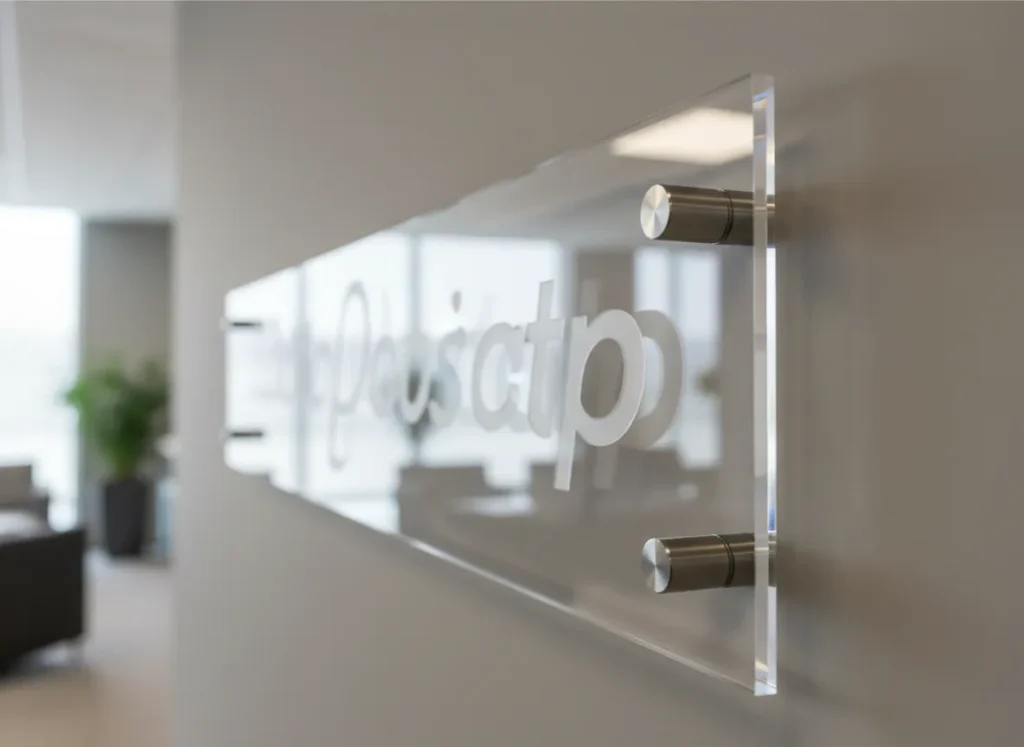
These are produced by printing directly onto the back of a clear acrylic sheet, so the graphics are viewed through the acrylic face. The acrylic layer protects the print and gives it depth and clarity. The result is a sign with vivid colour, a glassy finish, and a surprisingly solid feel for its weight. Flat-printed acrylic signs are widely used for office nameplates, reception signs, wall-mounted information panels, and retail displays.
Printed insert acrylic signs
These use two layers of acrylic with a printed insert sandwiched between them. The double layer adds further depth and rigidity and gives the sign a premium feel. Often used for directional signs, room identification signs, and branded wall panels in commercial environments.
3D acrylic letter signs
Letters and shapes are cut from thick coloured or mirror-finish acrylic and mounted directly to a wall or backing panel. The dimensional effect looks striking and is a popular choice for reception areas, entrance lobbies, and building fascias where businesses want their branding to make an impact. The letters can be mounted flush or on standoff fixings that create a shadow gap between the letters and the wall.
Engraved acrylic signs
Acrylic can be engraved using a laser to produce text and graphics that sit below the surface of the material. Often used for information plaques, door signs, employee nameplates, and awards. Engraving produces a permanent result that will not fade or peel, making it well suited to long-term applications.
Acrylic menu and display panels
Retail and hospitality businesses often use acrylic display panels to present menus, pricing, or promotional information in a way that looks clean and can be updated. Clear acrylic panels can hold printed inserts that slide in and out as the information changes.
Where Are Acrylic Signs Used?
The versatility of acrylic means it turns up in a wide range of business environments. Here are the most common applications.
Reception areas and lobbies
A business’s reception area is usually the first impression a visitor gets of the organisation. An acrylic sign — whether a flat-printed wall panel, 3D letters, or a printed reception desk sign — communicates professionalism and attention to detail in a way that a printed banner or foam board never could. This is one of the most common uses for acrylic in commercial settings.
Office door and room signs
Meeting rooms, offices, toilets, fire exits, and other areas all need clear identification. Acrylic door signs look clean and last well. They can be produced in consistent styles across a building so all signage has a unified appearance. Many businesses update these when teams move or rooms are repurposed — the signs are relatively affordable to replace or update in small quantities.
Directional signage
Businesses with multiple floors, departments, or entrances need directional signs to guide visitors. Acrylic works well here because it looks consistent, is easy to mount at a range of heights and orientations, and holds up to the daily handling that directional signs receive. In Derbyshire businesses, directional signs in acrylic are a common request for commercial premises, retail parks, and office developments.
Health and safety and information panels
Information panels displaying health and safety notices, fire escape routes, or operational instructions often need to be legible, durable, and mounted permanently. Acrylic panels tick all of these boxes and look more considered than a laminated sheet of paper.
Retail displays
Retailers use acrylic for price displays, product information panels, promotional stands, and shelf-edge signage. The clarity and brightness of acrylic makes products stand out and the signs themselves are resistant to the handling and cleaning that retail environments demand.
Building fascia and exterior signage
Acrylic can be used outdoors, though material selection matters. UV-stable acrylic in appropriate thicknesses withstands outdoor conditions well. 3D acrylic letters on a building fascia are a popular choice for businesses that want a distinctive external sign without the cost and complexity of illuminated signage.
Good to know: Not all acrylic is the same weight or quality. Thicker sheet acrylic (5mm and above) feels substantially more substantial than thinner options (2–3mm). For reception signs and wall-mounted panels that will be touched and handled regularly, a thicker sheet is worth specifying. Your sign maker can advise on the right thickness for each application.
Acrylic vs Other Sign Materials: A Practical Comparison
Acrylic is not always the right choice. Understanding how it compares to alternatives helps you make the right decision for each application.
Acrylic vs Vinyl
Vinyl signs are more affordable and flexible — they can be applied to curved surfaces, vehicles, windows, and walls. But they do not have the rigidity or premium feel of acrylic. Vinyl is well suited to temporary signage, large-format outdoor displays, and vehicle graphics. Acrylic is better where you need a rigid, permanent, professional-looking result.
Acrylic vs Foam Board
Foam board (foamex or PVC foam) is a common low-cost sign material. It is lightweight and affordable but lacks the durability and finish quality of acrylic. Foam board is fine for short-term use, internal displays, and exhibition signage where cost matters more than longevity. Acrylic outlasts foam board significantly in both appearance and physical durability.
Acrylic vs Aluminium
Dibond (aluminium composite) and powder-coated aluminium signs are excellent for outdoor use and give a very professional result. Aluminium is arguably better than acrylic for fascia signs and exposed outdoor applications where dimensional stability matters. Acrylic is often preferred indoors for the glassy finish and the possibility of 3D letter effects. Many businesses use both — acrylic inside, aluminium or composite outside.
Acrylic vs Brushed Metal
Brushed or polished metal signs have a distinctly high-end feel and suit certain types of business — legal firms, financial services, hotels. Acrylic can mimic some of that effect at lower cost, particularly mirror-finish acrylic for 3D letters. Metal signs typically cost more but last longer and have a weight and feel that acrylic does not replicate exactly.
What to Think About Before Ordering Acrylic Signs
Acrylic signs are a considered purchase. Getting a few things clear before you order saves time and ensures the result matches your expectations.
Indoor or outdoor use?
Most acrylic is fine indoors. For outdoor use, make sure your supplier specifies UV-stable material and an appropriate thickness. Some acrylic formulations are more vulnerable to UV degradation than others — cheaper acrylic can yellow over time when exposed to sunlight.
What finish do you want?
Gloss acrylic gives a bright, glass-like finish that suits vivid colour printing. Matte acrylic reduces reflections and can look more understated and contemporary. Mirror-finish acrylic has a reflective surface used for 3D letter effects. Your preference will depend on the environment and the brand impression you want to create.
How will the sign be mounted?
Acrylic signs can be fixed to walls using adhesive fixings, screws through pre-drilled holes, or standoff fixings (also called spider fixings) that hold the sign proud of the wall with small metal spacers. Standoff fixings create a more premium appearance and are popular for reception signs and branded wall panels. Let your supplier know how you plan to mount the sign so they can prepare it accordingly.
How do your brand colours translate to acrylic?
If your business has specific brand colours, it is worth discussing colour accuracy with your supplier. Printing on acrylic involves CMYK or UV print processes that can replicate most colours accurately. If you have Pantone references, share them. For coloured acrylic sheet (for 3D letters, for example), the available colour range depends on what sheet stock is available — your supplier can show you a sample range.
What size and shape do you need?
Acrylic can be cut to almost any shape using CNC routing or laser cutting. Standard rectangles and squares are the most affordable option. Custom shapes add cost but can produce very distinctive results — particularly for logo signs or brand shapes that benefit from a custom outline rather than a rectangular panel.
Acrylic signs: at a glance
How Long Do Acrylic Signs Last?
Indoor acrylic signs typically last many years with no degradation — the material itself is very durable in a controlled indoor environment. The print on a UV-printed or reverse-printed acrylic panel is similarly stable indoors, well away from direct sunlight.
Outdoors, the story depends on material quality and orientation. A UV-stable acrylic sign in appropriate thickness will perform well for five or more years in outdoor conditions. Signs facing direct south-facing sunlight will degrade faster than those in sheltered or north-facing positions.
Engraved acrylic is essentially permanent — the engraved surface does not fade or peel. This makes it a good choice for information that does not change, such as building identification signs, award plaques, or permanent safety signage.
FAQs: Acrylic Signs
How are acrylic signs made?
Depending on the type, acrylic signs are produced by UV printing directly onto sheet acrylic, by laser or CNC cutting shapes and letters, or by engraving the surface with a laser. Some signs combine multiple processes — for example, a printed panel sandwiched between two clear acrylic sheets, or printed panels with 3D acrylic lettering layered on top.
Can acrylic signs be produced in any colour?
Printed acrylic signs can replicate a very wide range of colours using CMYK or UV print processes. For cut acrylic sheet (used in 3D letters), the colour range is limited to what sheet stock is available from the manufacturer — typically a wide but finite range of solid colours. Ask your supplier for a colour chart if colour accuracy is critical.
Are acrylic signs expensive?
Acrylic signs cost more than vinyl or foam board alternatives but are priced within reach for most businesses. The cost depends on size, thickness, finish, and whether custom shapes or 3D letter work is involved. For many applications — reception signs, room signs, directional panels — acrylic represents good long-term value given its lifespan and appearance.
Can I get acrylic signs made locally in Derbyshire?
Yes. Printscene in Somercotes, Alfreton produces custom acrylic signs for businesses across Derbyshire and the surrounding area. Get in touch to discuss your requirements — they can advise on materials, finishes, and the right approach for your specific application.
How long does it take to get acrylic signs made?
Turnaround times vary depending on the complexity of the job and current workload. Simple flat-printed acrylic panels can often be produced within a few working days once artwork is approved. More complex 3D letter work or engraved signs may take longer. Discuss your timeline with your supplier at the outset.
Do acrylic signs need special cleaning?
Acrylic scratches more easily than glass, so avoid abrasive cloths or cleaning products. A soft microfibre cloth and a mild, non-abrasive cleaner keeps acrylic signs looking clean without damaging the surface. Some suppliers offer a protective coating on printed acrylic signs that adds further scratch resistance.
Looking for acrylic signs for your business?
Printscene produces custom acrylic signs for businesses in Alfreton, Derbyshire and across the region — from office door signs and reception panels to 3D letters and directional signage.
Related reading: Types of Outdoor Signs for Business: Which One Do You Need?.