
Printscene — Somercotes, Alfreton, Derbyshire
Direct Mail Postcards: Sizes, Postage Rules and Designs That Get Kept
Royal Mail’s machines will sort a letter as small as 90 x 140mm and as large as 165 x 240mm. Every common postcard size sits inside that window. That one fact makes direct mail postcards one of the simplest pieces of marketing a small business can send. There is no envelope to buy, no stuffing and no folding. This guide covers the sizes that post well, the rules on who you can mail, and the design choices that decide whether your card goes on the fridge or in the recycling.

Reviewed and signed off by Printscene
- Direct Mail
- Postcards
- Small Business Marketing
Quick answer: what are direct mail postcards?
Direct mail postcards are printed cards sent to customers or prospects without an envelope. One side carries a picture and the offer; the other carries the address and a short message. Because the message is visible the moment the card lands, they suit single offers, reminders, openings and win-back campaigns for local businesses.
Why a postcard, and not a letter or a leaflet?
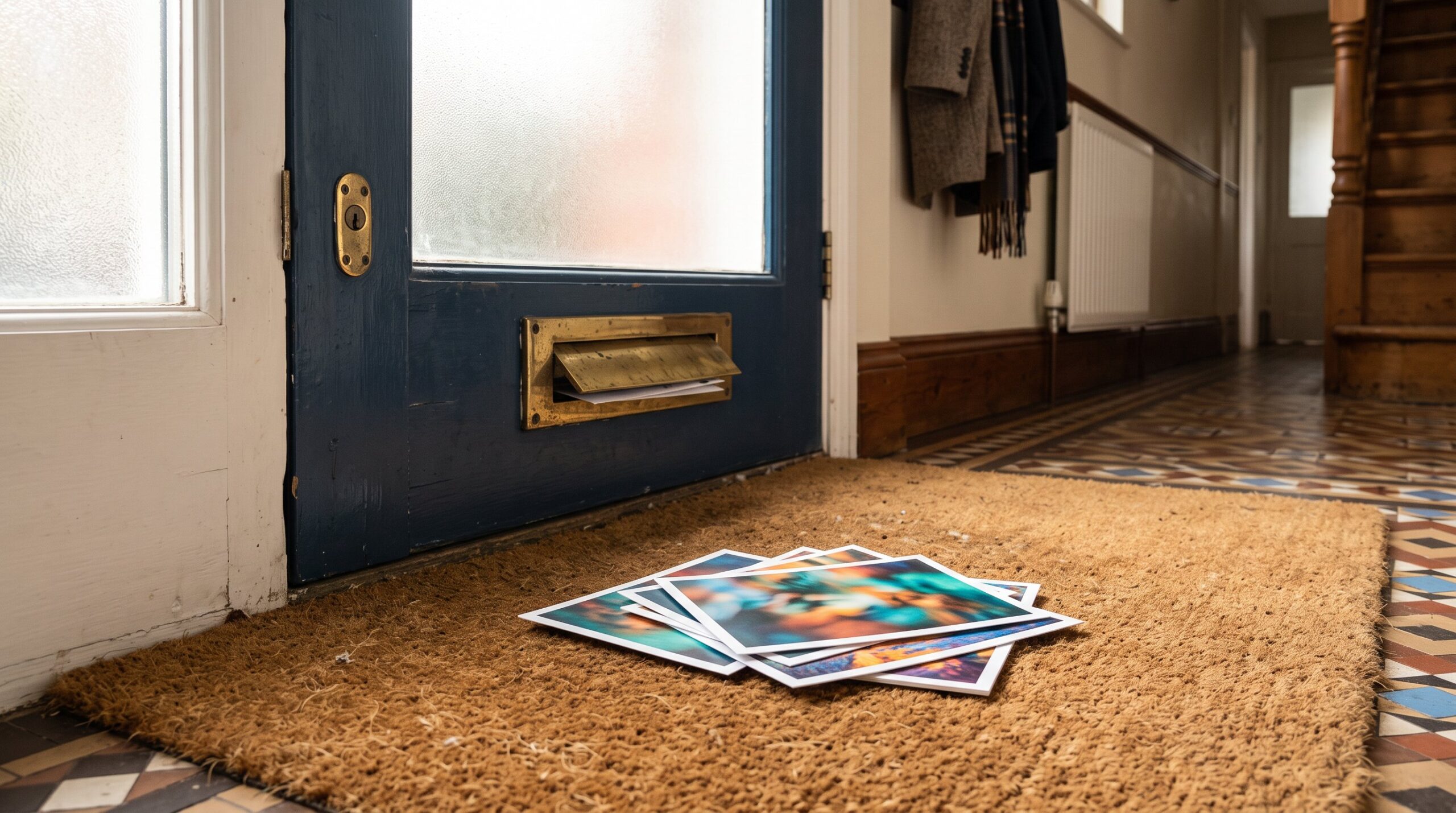
Most marketing mail has to be opened before it can do anything. A letter sits in an envelope. A folded leaflet has to be unfolded. A postcard skips that step entirely. It lands face up, and the reader has taken in your picture and headline before they have decided whether they care.
That is its strength and its limit. A postcard has room for one offer, one picture and one next step. If you need a price list, a menu or several services explained, a leaflet is the better tool. Our guide to ordering leaflet printing covers that side of things.
Where postcards earn their place is in the jobs that need a nudge rather than an explanation:
- Win-back mailings to customers who have not been in for a while.
- Reminders: a service is due, a booking needs renewing, the season has changed.
- Openings and relaunches: a new shop, a new location, new opening hours.
- Offer cards with a code or an expiry date, so you can count the response at the till.
- Thank-you cards slipped into an order or posted after a first visit.
Here is the point of view we would push on anyone planning a mailing: a postcard is not a small leaflet. The mistake we see most often is trying to squeeze a whole leaflet onto one. Every extra line you add makes the one line that matters harder to find.
Direct mail postcard sizes that post as a standard letter
Size affects two things: what the card costs to post and how much room you have to work with. The good news is that the three common sizes all fall inside Royal Mail’s letter format.
Royal Mail’s Mailmark letter specification sets a rectangular letter at a minimum of 90 x 140mm and a maximum of 165 x 240mm, no thicker than 5mm and no heavier than 100g. Here is how the standard sizes compare:
| Size | Dimensions | Inside letter format? | Best for |
|---|---|---|---|
| A6 | 105 x 148mm | Yes | The classic postcard. One picture, one offer. |
| DL | 99 x 210mm | Yes | Long and slim. Good for a timeline, a short list or a tall image. |
| A5 | 148 x 210mm | Yes | More room for the offer and a larger picture. |
Anything smaller than 90 x 140mm drops below the minimum, so a tiny novelty card can cause problems in the post. Anything over 165 x 240mm stops being a letter and is charged at a higher rate. If you are working to a custom size, check it against those two numbers before you design anything.
Which size should you choose?
For most local mailings, A6 is the right starting point. It is the size people recognise as a postcard, and its limits keep the message tight. Move up to A5 when the picture is doing the selling, such as a finished kitchen, a plated dish or a before-and-after. DL suits anything that reads top to bottom, such as opening hours or a three-step process.
Card weight: why the stock matters more than you think
A postcard travels naked. It goes through sorting machines, a postbag and a letterbox with nothing to protect it, so the card has to be stiff enough to survive the trip.
The same Royal Mail specification recommends a minimum of 200gsm for postcards. Thin card is more likely to crease, curl or catch, and a creased card arrives looking cheap. A heavier stock also changes how the card feels in the hand, which matters more than most people expect. A card that feels substantial gets kept. One that feels flimsy gets treated like junk mail.
If gsm figures are new to you, our guide to paper weights and gsm explains what the numbers mean and how card compares with paper.
Finishes: the picture side and the writing side
A postcard has two jobs and two sides, and they need different treatment.
- The picture side can be finished in gloss, matt or soft-touch laminate. Gloss makes colours and photographs pop. Matt looks calmer and reduces glare. Soft-touch has a velvety feel that people notice the moment they pick it up.
- The writing and address side is usually best left uncoated. A ballpoint will not write on laminate, and neither will most printers used for addressing. If anyone needs to write on the card, or a mailing house is printing addresses on it, keep that side bare.
When you order, tell your printer the card is going in the post. We keep the address area clear and set the layout up for it, so the design does not fight the address.
Designing a direct mail postcard that gets kept
You get a second or two of attention on the doormat. The design has to use that time well. These are the principles that make the difference.
1. One message, said plainly
Write the headline before anything else, and make it the offer. “20% off your first service” beats “Welcome to our family-run business” every time. If the reader only sees one line, it should be the line that gives them a reason to act.
2. A picture that does the selling
The picture side is your shop window. Use one strong photograph of the result your customer wants rather than a collage of everything you do. Make sure it is a high-resolution file, as a web image that looks sharp on a phone can look soft when printed.
3. A clear next step
Tell people exactly what to do: call, book online, bring the card in. Put your phone number and web address where they are easy to find, and give them room to breathe.
4. A way to measure it
Add a code, an expiry date or a simple “bring this card in” line. When the cards come back across the counter, you can count them. That turns a mailing from a hopeful guess into something you can judge, repeat and improve.
5. Room for the address
Leave the address area completely clear on the reverse. Text, images or background colour in that space can make the address harder to read.
Before you send the artwork, check it has bleed and that nothing important sits too close to the trim. Our bleed, trim and safe area guide shows how to set the file up so nothing gets cut off.
The rules on who you can mail
Postal marketing is treated differently from email and text marketing, and it is worth knowing why.
The rules that require consent for marketing emails and texts come from the Privacy and Electronic Communications Regulations (PECR). Post is not covered by PECR. The ICO’s guidance on choosing a lawful basis for direct marketing lists postal marketing as having no PECR requirement, with legitimate interests or consent as the likely data protection basis.
That does not mean anything goes. If you are mailing named people, you are using personal data, so UK GDPR still applies. In practice, for a small business, that means:
- Mail people who would expect to hear from you, such as existing customers who have bought from you before.
- Respect anyone who has asked not to be contacted, and keep a record of it.
- Give an easy way to opt out on the card itself, such as a phone number or email address.
- Be careful with bought-in lists. If you did not collect the data yourself, check where it came from and whether it was screened against preference services.
This is a general overview, not legal advice. If you are planning a large mailing to a list you did not build yourself, read the ICO’s guidance in full first.
Addressed mail or door-to-door?
You do not have to address a postcard at all. Unaddressed cards can be delivered door to door across a chosen area, which suits openings and anything aimed at a whole neighbourhood. Addressed postcards suit existing customers, where you know who you are writing to and can make the message personal.
How many direct mail postcards should you order?
Start smaller than you think. A short run to test an offer is a perfectly normal order on our marketing postcard printing service, and it tells you far more than a big mailing based on guesswork. Send a few hundred to one area or one customer group, count the cards that come back, then decide.
The unit price falls as the quantity rises, so if the test works, the second, bigger run is usually better value. If it does not work, you have learned that cheaply and can change the offer, the picture or the audience before you spend more.
Our view: one offer, heavy card, a way to count it
Most postcard mailings that disappoint fail for one of three reasons: too many messages, card too thin to feel worth keeping, or no way of telling whether it worked. Fix those three and a simple A6 card through the door will outwork a far more elaborate campaign.
Frequently asked questions about direct mail postcards
What size should a direct mail postcard be?
A6 (105 x 148mm) is the standard. A5 (148 x 210mm) and DL (99 x 210mm) are popular alternatives. All three fit inside Royal Mail’s letter format of 90 x 140mm minimum and 165 x 240mm maximum.
Can you send a postcard without an envelope?
Yes. That is the whole point of a direct mail postcard. It needs to be on stiff enough card to survive the post, with the address area left clear on the reverse.
Do you need consent to send marketing postcards?
Postal marketing is not covered by PECR, so the consent rules for email and text do not apply. If you mail named people, UK GDPR still applies: the ICO says legitimate interests or consent is the likely lawful basis.
Are postcards better than leaflets for direct mail?
For one offer, yes: a postcard arrives face up and needs no opening. For more detail, such as a menu, a price list or several services, a leaflet gives you the room a postcard cannot.
Postcards printed in Derbyshire
We print direct mail and promotional postcards from our workshop in Somercotes, Alfreton, for businesses across Derby, Ripley, Belper, Matlock and the rest of Derbyshire. Tell us the size, the quantity and whether the cards are going in the post, and we will come back with a real price. Short test runs are welcome, and we can design the card if you do not have artwork.